The yarn in Hiut Denim’s newest jeans was designed to dry a body after a bath. A family twisting company in Gifu spent five years developing it for towels, then sold more than 19 million. Now a Japanese mill is weaving it into indigo selvedge, and a jeans factory in West Wales is cutting it into five-pocket jeans that go on public sale October 27.
Hiut calls the cloth Super Zero® Indigo. It is the brand’s second Super Zero run and its first in indigo, which makes it a good test of how a yarn engineered to have almost no twist fades.
Probably not much different from any other raw selvedge, because it depends on when the yarn meets the dye.
A Yarn Made of Cotton and Air
Twist holds spun cotton together. Short fibers are drawn out and wound around each other until friction locks them into a continuous strand. More twist makes a tighter, harder, stronger yarn. Less twist makes a softer one that is harder to work with, because there is less holding it together.
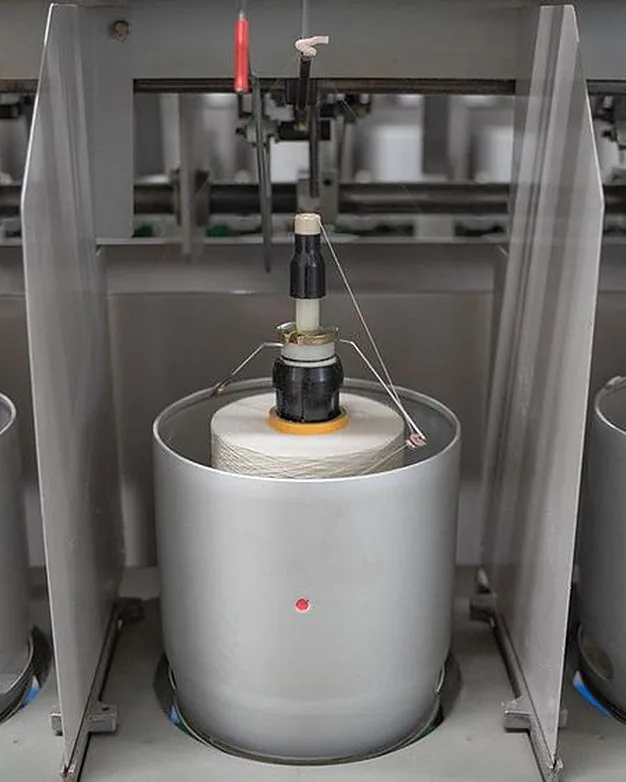
Super Zero is a way around that trade-off. The patent holder, Asano Nenshi, describes it in steps on its own site. It combines a cotton yarn twisted to the left with a water-soluble yarn, then twists it again in the opposite direction. Twisting the pair in reverse unwinds the cotton, and the soluble yarn holds the loose fibers together. The company calls the result munenshi. In Japanese, nenshi is twisted yarn, and mu means none.
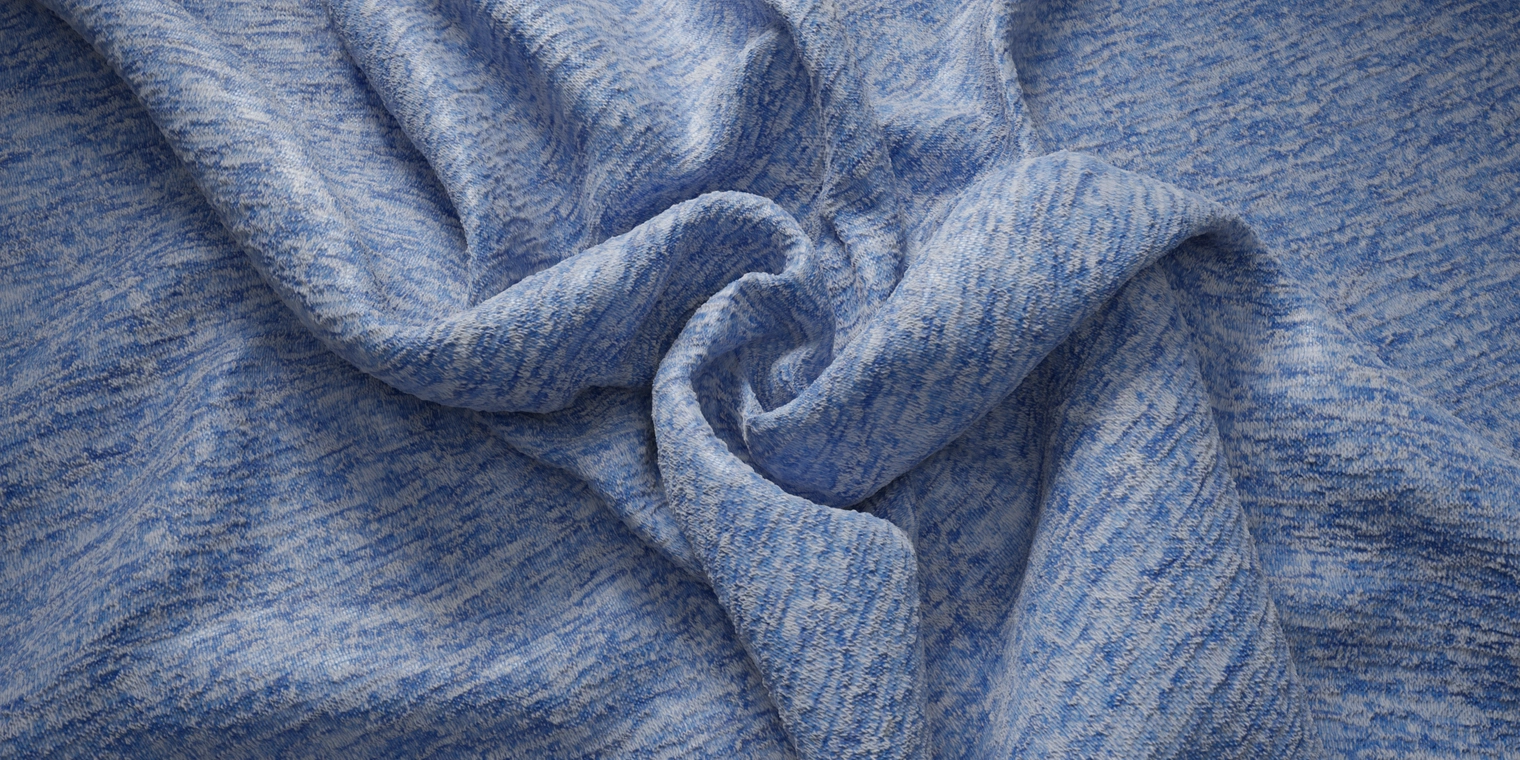
Super Zero goes one step further. The company twists the munenshi yarn to the right one final time and sets it in a vacuum steam press that Asano invented for the job. The soluble yarn is later washed out, and with nothing left to hold them in place, the cotton fibers relax and spread apart. What remains, in the company’s words, is “the first ever air-made yarn.” A 2025 profile in a Fukushima prefectural newsletter puts the expansion at about 1.6 times the volume of the original yarn.
Cotton yarn holds together because it is twisted.
Asano’s US patent application, published in February 2013, describes the same structure in technical language: a spun yarn twisted with a water-soluble yarn in the opposite direction of the spun yarn’s twist, producing a bulky, lightweight fabric that resists pilling and dries quickly. The company says the method works on cotton, wool, silk, and linen.
Five Years in Gifu
Asano Nenshi is a yarn twister in Anpachi, a small town in Gifu Prefecture. Its own site lists the company as established in December 1969. The Fukushima newsletter lists 1967 as the founding year, and the gap most likely separates the business’s start from its incorporation.
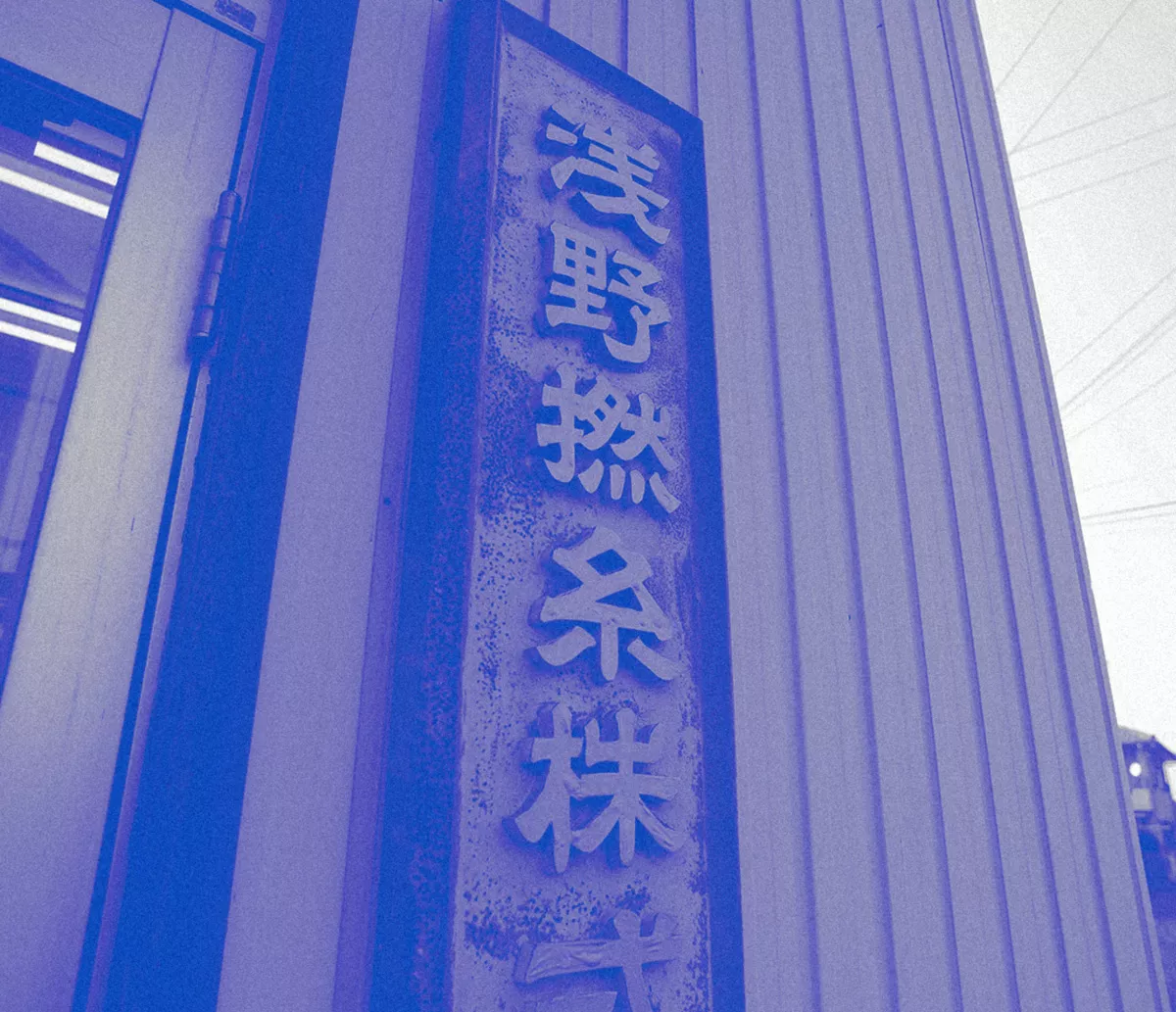
Research on the new yarn began in 2002. The company describes what followed as “many trials and errors,” and it finished developing the method in 2007. The first product was a towel.
According to Asano’s figures, a Super Zero towel absorbs about 1.5 times as much water as an ordinary one, dries about twice as fast, and weighs about half as much. It sheds very little lint and carries certification from the Japan Atopic Dermatitis Association. MESM Tokyo, a hotel that opened in 2020, chose the towels for its rooms. Asano’s own towel brand, Air Kaoru, had passed 19 million towels sold by early 2025.
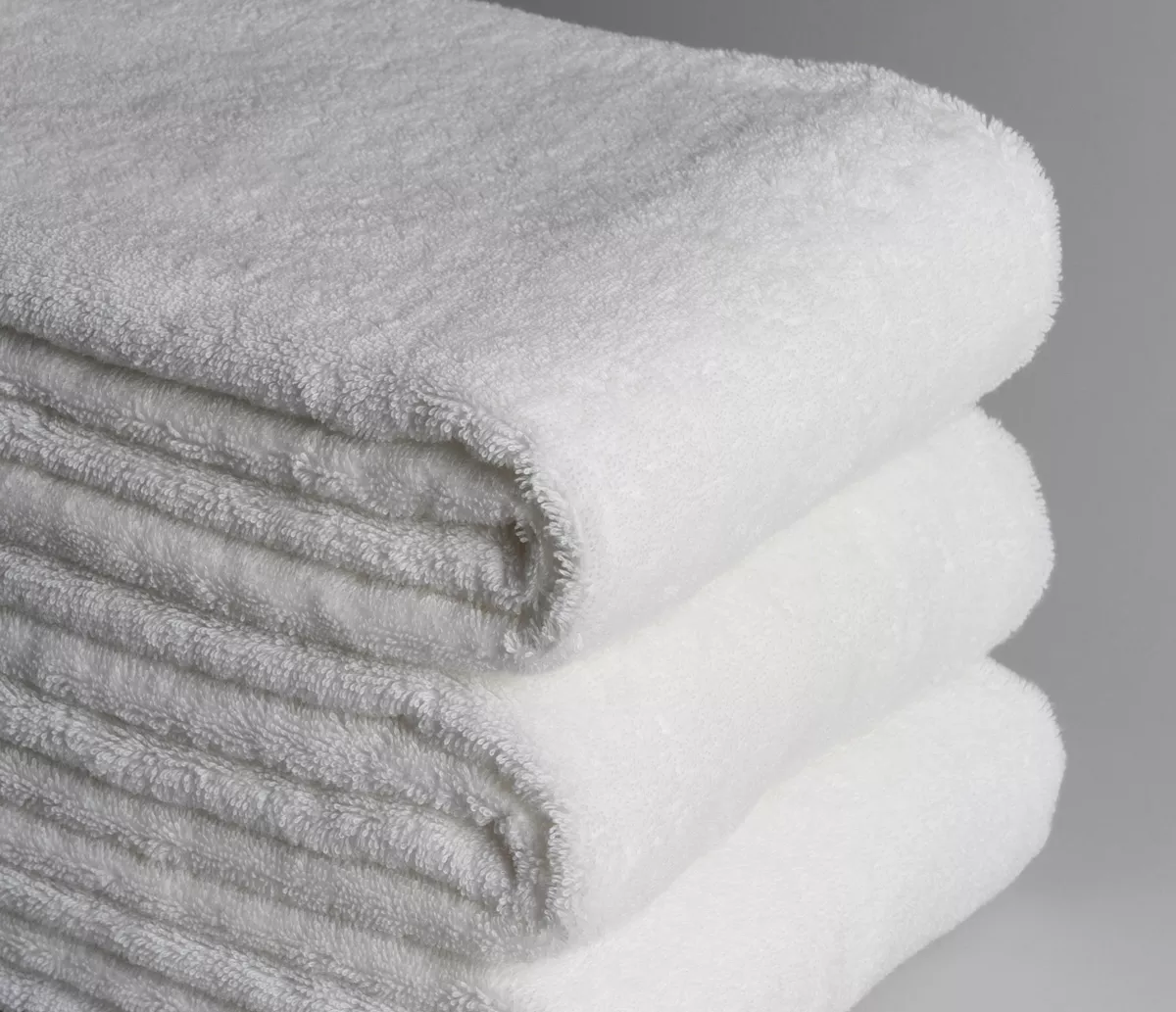
In 2024, the company announced a still more extreme version it calls cho-munenshi, or ultra-zero-twist yarn. According to a TV Asahi report, a bath towel half the usual size made from it can dry a whole body. It has since gone on sale as Wata no Hana, or “cotton flower,” a towel line whose pile, Asano says, opens a little more with every wash, like a cotton boll coming into bloom.
↑ Table of ContentsFour Kilometers From the Plant
In April 2023, Asano opened a second factory, the Futaba Super Zero Mill, in Futaba, Fukushima. Futaba is one of the two towns that host the Fukushima Daiichi nuclear plant, and it was among the last places in the prefecture to reopen after the 2011 disaster. The mill sits about four kilometers from the plant.
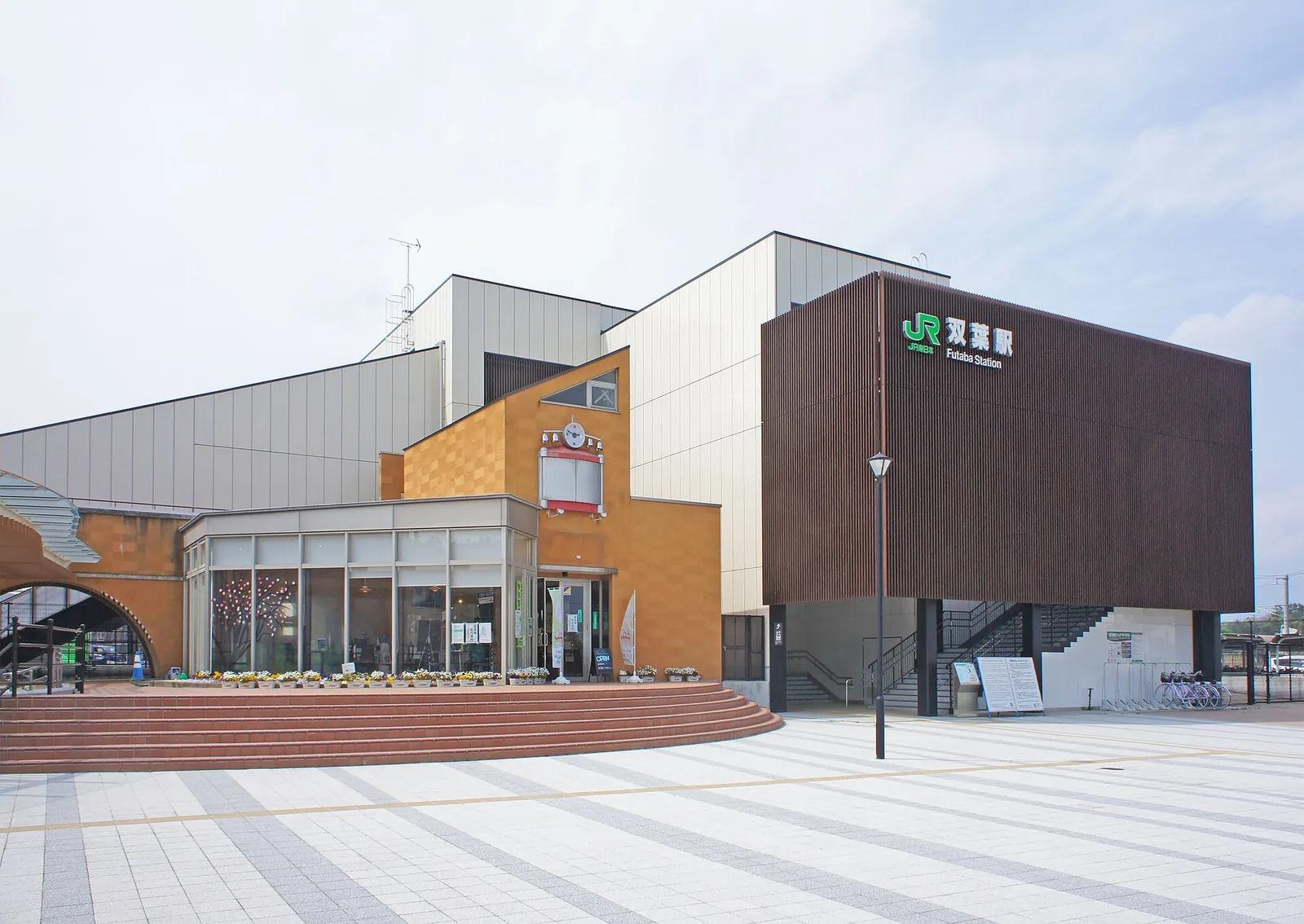
WWD Japan reported the project at about ¥3 billion, with capacity for roughly 500 tonnes of yarn a year. The building houses the twisting floor, a towel shop, and a café, and the public can visit Tuesday through Sunday. TV Asahi reported in November 2024 that about half of the mill’s employees are local to Fukushima.
Masaki Asano, the company’s president, described the doubt the project faced in that same report:
↑ Table of ContentsPeople ask whether you can really build a factory in Fukushima and work there, and whether yarn made in Fukushima is safe. This yarn spreading around the world will be the great proof of the recovery.
From Towels to Twill
Asano’s Super Zero yarn is cotton, but the method isn’t tied to one fiber. In June 2024, Lenzing Japan, part of the Austrian company that makes TENCEL™ fiber, published an article on Carved in Blue, Lenzing’s site for the denim trade, about applying it to TENCEL. Lenzing replaced cotton with TENCEL lyocell, working alongside Yoshi Yamada of Ys Deco Japan, and spent nearly a year and a half on twist counts, weave constructions, and finishing before promoting the result for Spring/Summer 2024. By then, Lenzing noted, some Japanese denim brands had already adopted cotton denim made with Super Zero.
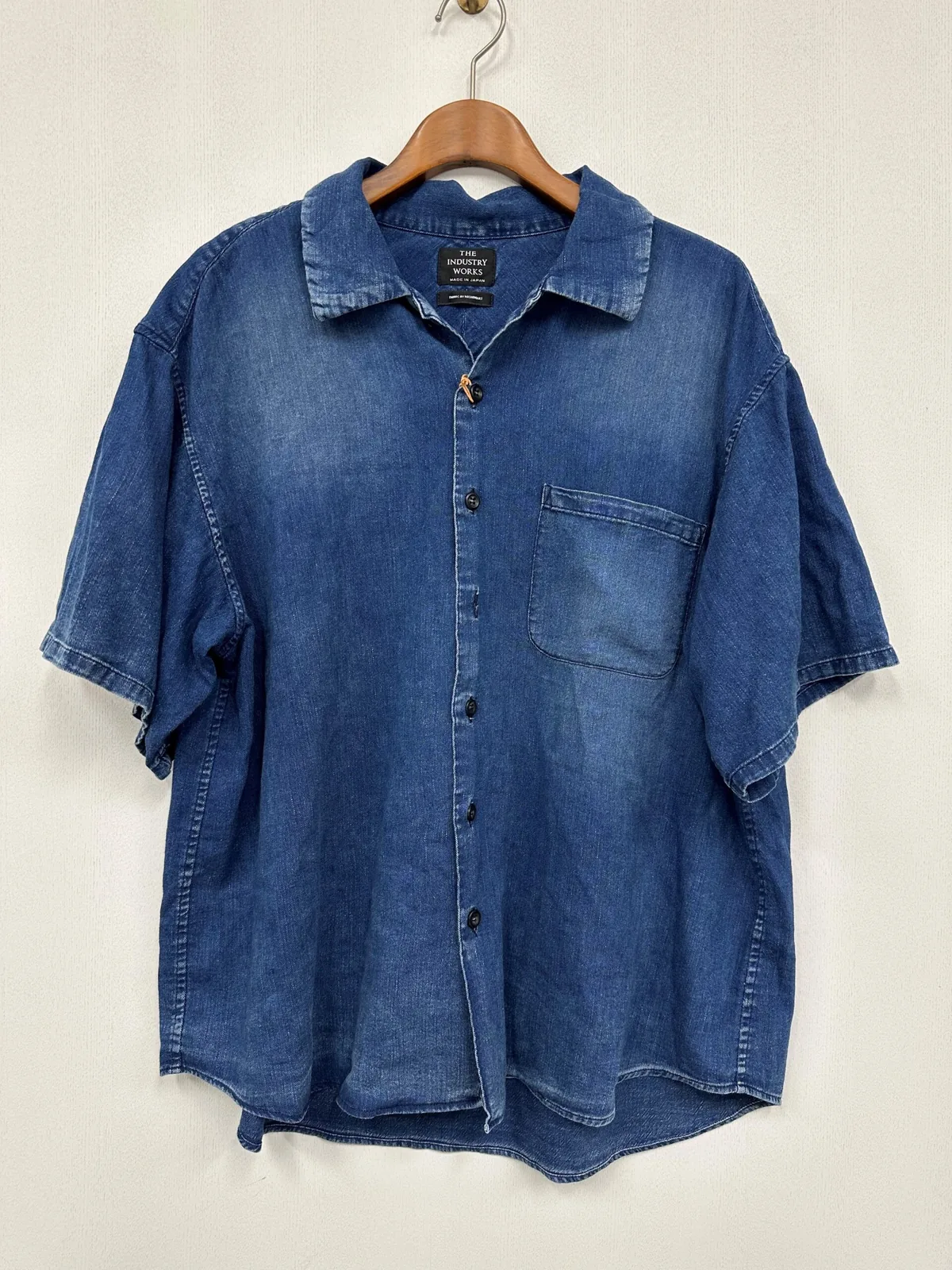
Lenzing was after what it called “rigid but super soft” denim, and its write-up pins down when the change happens: the soluble yarn dissolves during finishing, after weaving, and only then does the yarn swell and soften. Lenzing reports that the fabric gets “softer and bulkier after several usages/washes,” that the yarn can be spun anywhere from Ne6 to Ne120, and that it adds a little natural stretch without elastane. Ne is the English cotton count: the number of 840-yard lengths it takes to make a pound of yarn, so a higher number means a finer yarn. Ne6 is thick enough for heavy denim, and Ne120 is fine enough for a dress shirt.
Big John, the Okayama jeans maker, released its own Super Zero jean in April 2025: the M104SZ, a slim tapered selvedge jean in 100% cotton, sold in two indigo washes and two black ones.
↑ Table of ContentsDouble Black
Hiut’s first Super Zero run in 2025 was all black, made with cloth from Kowa, a Japanese mill whose history Hiut traces to 1894, when it began as a cotton fabric wholesaler. In the brand’s announcement email: “Now Kowa have taken this yarn and woven it into selvedge denim. On old shuttle looms. Warp black. Weft black. A mid-weight 13oz denim. Finished with a red line selvedge.”
The same email listed the denim’s properties: “Soft. Absorbent. Quick drying. Warm in winter. Cool in summer. Even a little stretch - without elastane.” The run was limited to 100 pairs at £375, in 100% cotton, cut and sewn in Cardigan and shipped in October 2025.
With black in both warp and weft, Double Black showed how the cloth feels but said little about how it fades. A black-on-black jean fades toward grey and charcoal, never toward the high-contrast blue and white that raw denim culture admires.
↑ Table of ContentsSuper Zero Indigo
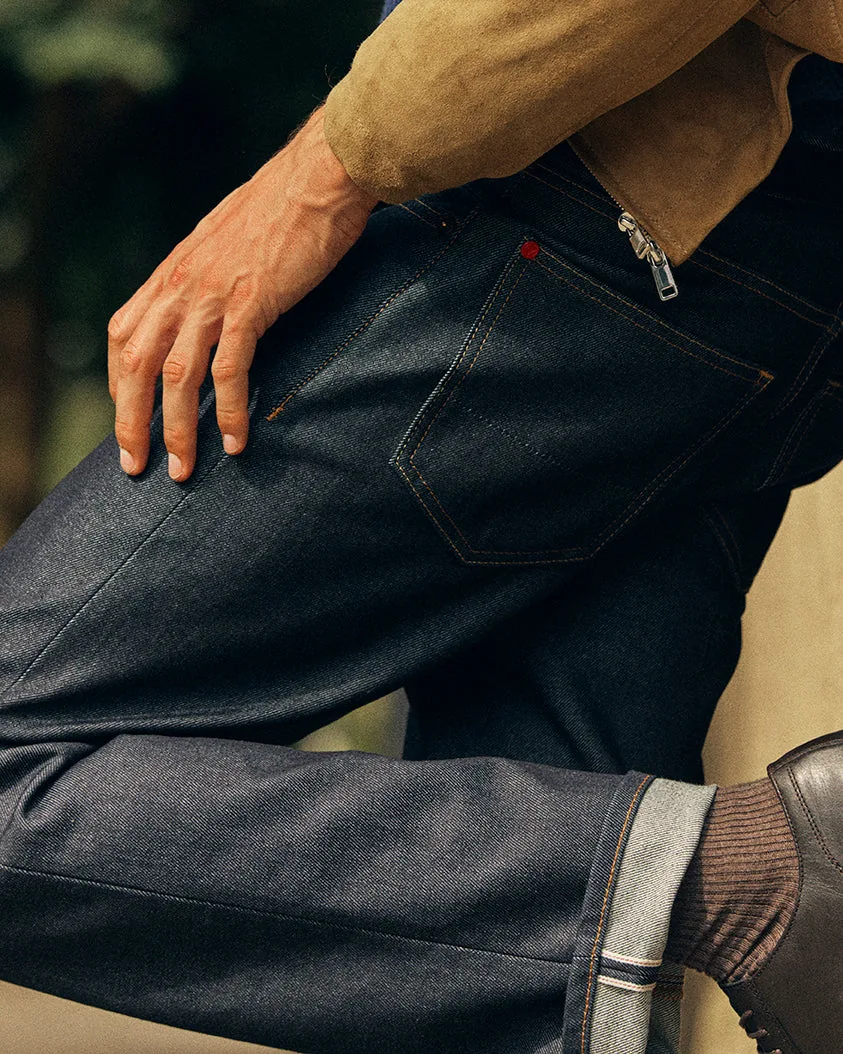
The new run is 13oz redline selvedge, still woven at Kowa, now in deep indigo. Hiut describes the cloth as having “a softer handle” with “less stiffness and a supple drape from the first wear,” and says it “will soften further, crease and fade with use.”

It comes in eight cuts, all at £350:
- Men’s: The Jerald (straight), The Benjamin (tapered), The Gwilym (slim), The Miles (relaxed wide), and The Finn (slim tapered)
- Women’s: The Edna (wide relaxed), The Aurelia (wide straight), and The Mari (slim)
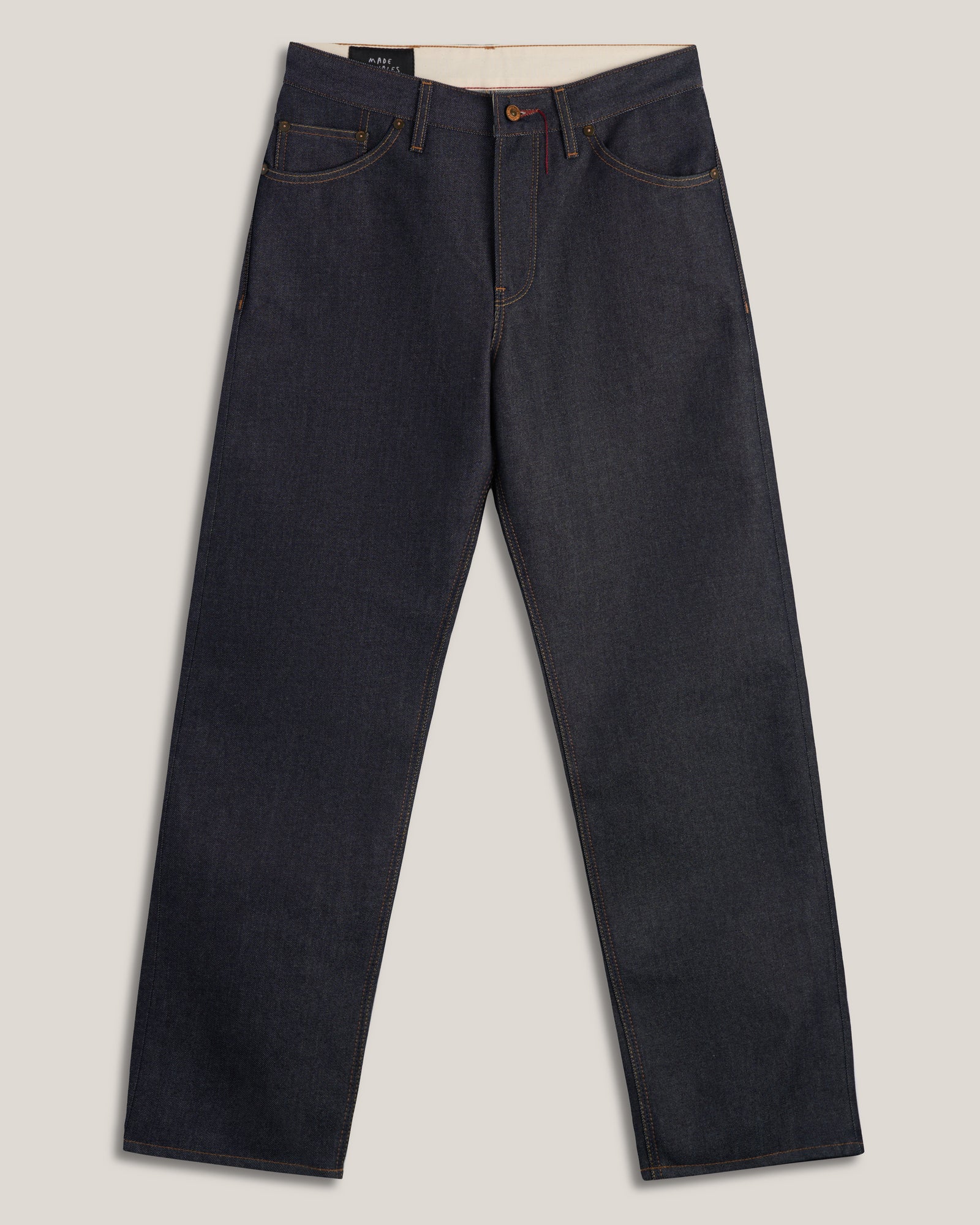
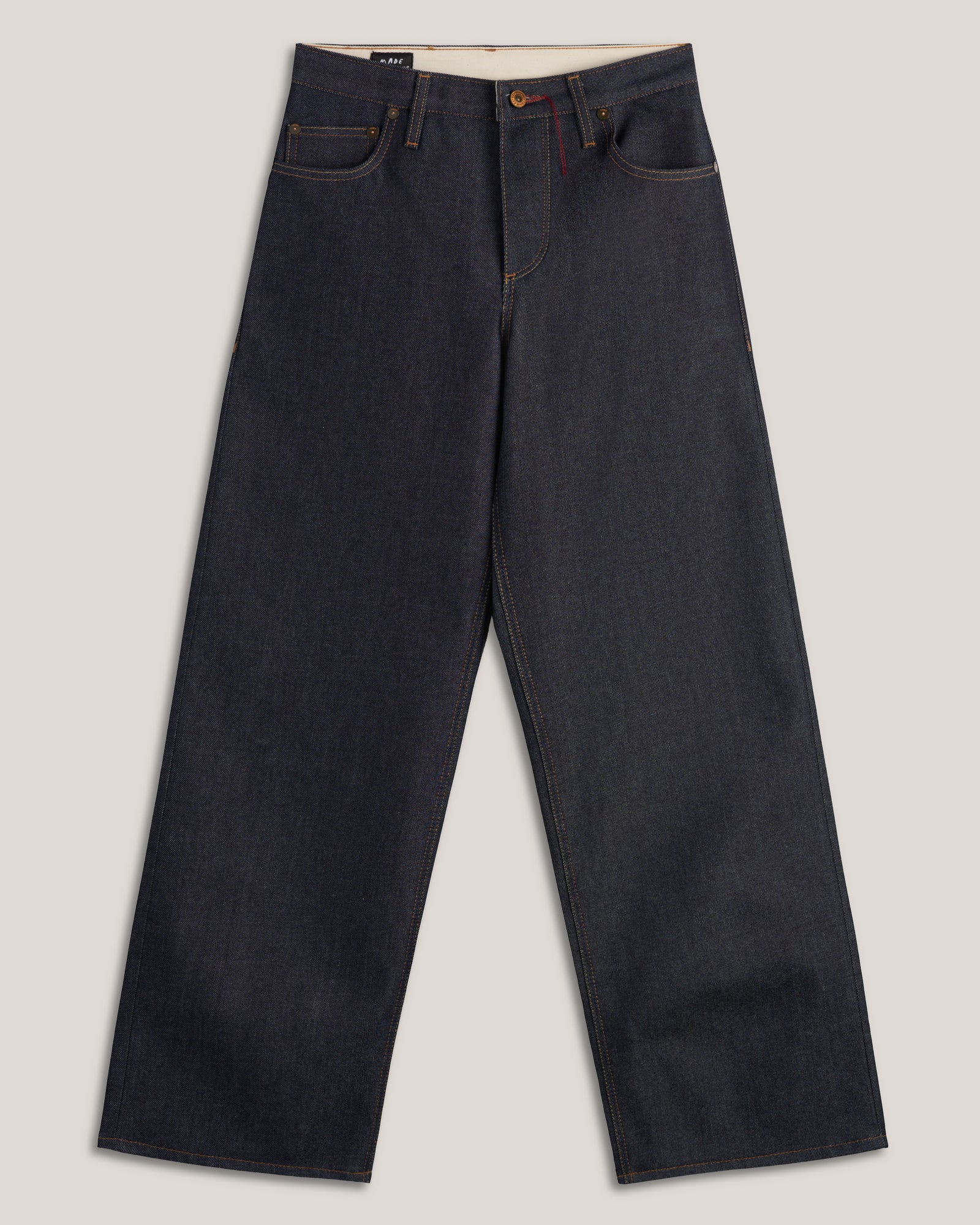
Early access opened October 20, and public sale begins October 27. An extended size range is available only through made-to-order, and the first 100 buyers receive a bottle of Hiut’s Denim Revival Spray. Hiut describes the release as a short run in limited numbers but has not published a pair count.

Hiut’s product pages say the cloth pairs indigo-dyed warp yarns with natural weft yarns. They don’t say which is Super Zero, how the warp is dyed, or the yarn count.
↑ Table of ContentsWhat Twist Does to a Fade
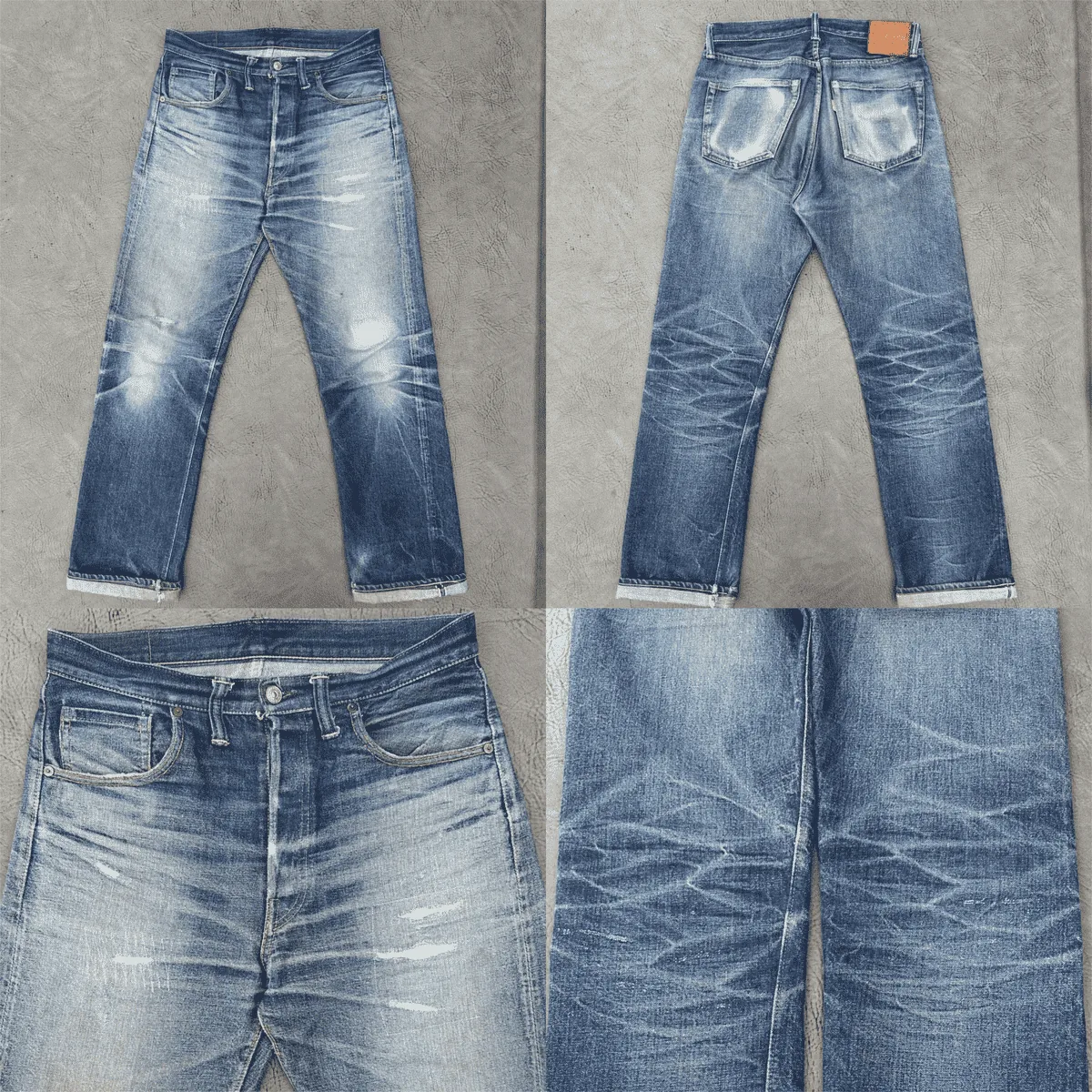
A raw denim fade depends on indigo staying near the yarn’s surface. Rope dyeing gives the warp a series of brief dips in the vat, each followed by air to oxidize the dye, and the indigo builds up in the outer layers of the yarn while the core stays close to white. That pattern is called ring dyeing, and it’s why a worn knee or a whisker shows a lighter blue. Abrasion wears through the colored shell to the pale center. Dyed in the Wool covers how dyeing method controls penetration, and Part Eight of Built for Color covers indigo itself.
Twist is one of the things that keeps the dye out. A 2013 patent from Sanko Tekstil, the Turkish group that owns the denim mill Isko, describes a low-twist cotton denim and states the effect directly: “the indigo dye penetrates into the yarns more deeply due to the decreased twist level.” The same patent notes that “as the twist multiple decreases, the fabric becomes softer” and that lower twist can give a brighter fabric.
The Sanko patent describes yarn that is already low-twist when it goes into the dye. According to Lenzing, Super Zero isn’t: the soluble yarn is still wound in when the fabric is woven, and it only dissolves in finishing. Denim warp is dyed before weaving, so a Super Zero warp would meet the indigo while it is still bound and compact, much like an ordinary yarn. The ring dyeing should form as usual, and the fibers only spread apart afterward.
A dramatically different fade is unlikely for that reason. Any change would more likely show at the surface, where a bulkier, looser yarn could wear into a softer, hazier fade with less contrast. No published source has tested that. Asano’s material doesn’t discuss dyeing, and Lenzing’s article doesn’t mention fading.
Fades come from the indigo warp wearing through to its white core, so if the Super Zero yarn is only in the natural weft, the warp is ordinary ring-dyed cotton, and the jeans should fade like any other raw selvedge. I asked Hiut which yarn carries Super Zero but didn’t hear back before publication.
↑ Table of ContentsSoft From the First Wear
Raw denim culture has long treated stiffness as the price of a good fade, an idea I wrote about in The Authenticity Trap of Raw Denim.
Super Zero is engineered to skip that stage. The cloth is meant to be soft on the first day, to breathe, and to give a little without elastane. If it also fades with real contrast, the long break-in becomes one option among several rather than the only way in. If it fades softly and evenly, it is still a comfortable selvedge jean made from a yarn designed for bath towels.
Hiut’s run goes on public sale October 27 at £350, and Big John sells the M104SZ through its English-language store, priced in yen. Hiut’s three women’s cuts and the M104SZ are in the Fit Finder with full size charts, so you can check either against a pair you already own before ordering a jean you can’t try on.
If you buy a pair, send me photos on Instagram at three and six months. Those will say more about how Super Zero ages than anything published so far.